Fundraising generates vital income and helps raise awareness and the profile of your branch or group. With so many ways to fundraise, it’s important to focus your energy and plan activities well. This ensures your time and resources achieve the best results for your branch or group and help make a difference for people affected by MND, their carers, families and friends.
You can discuss fundraising plans with your Relationship Fundraiser.
Whilst fundraising for the MND Association, you must abide by the Code of Fundraising Practice.
We have produced a shortened Branch and group Digest of the key points and changes related to branch and group fundraising.
Whatever your branch or group fundraising event - from a ball to a small coffee morning - it is important that it is safe and that you are aware of any legal issues.
For all events, you need to consider the following and ensure you have followed the correct guidance and advice:
- Risk assessment
- First aid
- Insurance
- Food safety
- Licensing alcohol
- Raffles and lotteries
- Licensing entertainment
- Collections of money
- Association branding and logo.
Every branch or group needs to have a volunteer who has trained in the risk assessment process and understands what this involves. If there has been a failure to follow the correct procedures, the Association’s insurance could fail to cover in event of an accident.
To ensure you are conforming to the most up-to-date requirements, do ensure you get advice and guidance from your Relationship Fundraiser and allow plenty of time for event planning.
Everyone will then be able to relax on the day and enjoy themselves.
Fundraising ideas
The following documents provide guidance on some of the different ways you can raise funds for your branch or group. Some you may already be doing, and some you may want to try in the future.
MND Association events
- Bake it! - encourage the bakers around you to say it with cake
- Silence Speaks - a sponsored silence, with a difference
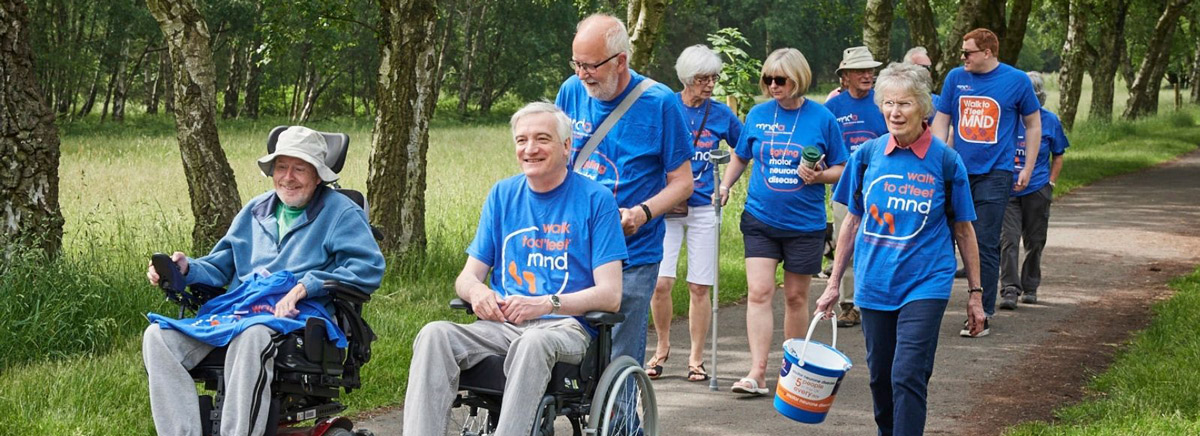
- Walk to d'Feet - organising a group walk in your local area
Other ways to raise funds
Materials and resources
- Materials order form
- Sponsor forms - a quick guide (a guide for those raising funds on your behalf)
- Gift Aid guidance
- Gift Aid form
- Planning an event
- Donation Platforms guidance
Raffles and lotteries
Motor Neurone Disease Association Raffles and Lotteries are licensed and regulated in Great Britain by the Gambling Commission under account number 4800. The Licence Conditions and Codes of Practice (LCCP) change regularly. To keep up to date with any changes visit the Gambling Commission website.
To check our current licensed status here - account number 4800
Please read our Raffle and Lotteries Guidance below for more information.
Static collection tins
We must ensure that we comply with charity law by rigorously adhering to the Institute of Fundraising Codes of Practice. To follow this we have produced two packs for you in relation to static collecting tins:
Static collection tins process
Pack 1 - Branch and Group Static Tin Pack
These are the guidelines and resources to use if your branch or group wishes to place a static collecting tin in a shop, pub or wherever you have been given the opportunity.
- Branch and group static tin guidelines
- Template letter for site holders and branch and group to keep
Pack 2 - Fundraiser (Branch and Group) Static Tin Pack
Use these guidelines and resources if you have a fundraiser come to you (who is not a part of your branch or group) who wishes to place and manage a static collecting tin, or a number of static tins in a shop, pub etc, to help with their fundraising or to boost sponsorship for an event.
Cash handling
Please consider the following when handling cash.
- Cash handling in the field is insured to maximum of £500.
- Where possible, payment by cheque or paid direct to the Association's account is preferable.
- Two unrelated persons should always be present when handling cash.
- Bucket/tin seals should never be tampered with by staff or volunteers, unless in a safe and secure environment with two persons present.
- When monies are counted, there must always be a minimum of two unrelated persons present.
- Cash should not be left in a vehicle overnight.
- Cash and cheques should be taken to the bank at the earliest opportunity.
- If you are ever challenged by a third party while handling cash, you should hand it over without resisting. The loss should be reported to the Police at the earliest opportunity. Personal safety must always take priority.